
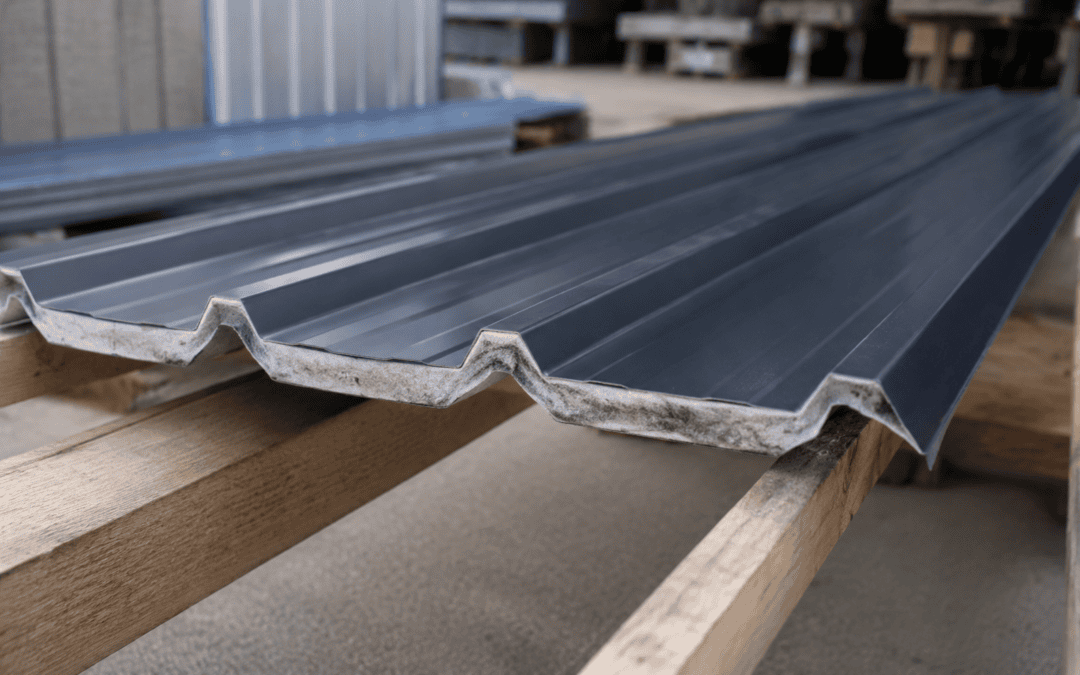
Anti-condensation roofing sheets may be useful on suitable single-skin metal roofs where moisture could collect on the underside of the sheets and drip into the building. A specialist absorbent backing temporarily holds condensation until conditions allow it to dry. It can help manage condensation, but it does not replace suitable ventilation, insulation or project-specific building design.
This guide explains why condensation forms, how anti-condensation backing works and what to consider before ordering. For product options and quotations, see our anti-condensation roofing sheets.
What causes condensation under metal roofing sheets?
Condensation forms when warm, moisture-laden air meets a colder surface and cools below its dew point. On an uninsulated metal roof, the underside of the sheet can become cold enough for water droplets to develop.
The amount of moisture varies with the building and how it is used. Livestock, stored produce, wet machinery, vehicle movements and everyday changes in temperature can all increase humidity. Ventilation, roof pitch, local conditions and the construction of the building also affect the result.
What is anti-condensation backing?
Anti-condensation backing is an absorbent material applied to the underside of a metal roofing sheet. When condensation begins to form, the backing holds moisture within its fibres rather than allowing droplets to fall immediately onto the space below.
When the temperature rises and air movement improves, the retained moisture can evaporate back into the air. The system therefore needs appropriate ventilation and drying conditions to work as intended.
How does anti-condensation backing work?
- Warm, humid air rises towards the colder roof sheet.
- Moisture condenses at the underside of the metal.
- The backing temporarily absorbs and holds the moisture.
- Ventilation and warmer conditions allow the material to dry.
It is best understood as a way to help control intermittent condensation—not as waterproofing, insulation or a cure for persistent moisture problems.
Which buildings may benefit?
Anti-condensation sheets are often considered for uninsulated agricultural, industrial and storage buildings where occasional dripping would be inconvenient. Examples may include:
- Open or suitably ventilated agricultural sheds
- Garages, workshops and machinery stores
- General storage buildings
- Some canopies and simple outbuildings
Suitability depends on the whole roof build-up, the use of the building and the level of moisture produced. Buildings with high or continuous humidity may need a different approach, so project-specific advice is important.
When is anti-condensation backing not enough?
Backing alone may not solve condensation caused by inadequate ventilation, water ingress, thermal bridging or a building use that produces substantial moisture. Heated or occupied buildings can require a properly designed insulated roof system and vapour control strategy.
If the building needs dependable thermal performance, consider whether composite insulated panels are more appropriate. Always confirm the proposed construction with a suitably qualified designer or building professional where required.
Do anti-condensation roofing sheets still need ventilation?
Yes. Air movement helps the backing release retained moisture between condensation cycles. Without suitable drying conditions, the material can remain saturated and become less able to hold further moisture.
Ventilation requirements vary by building, so avoid relying on a generic opening size or layout. Explain how the building is used, whether it is open or enclosed and what ventilation is already present when requesting advice.
Can 32/1000 sheets be supplied with anti-condensation backing?
Anti-condensation backing may be available with suitable metal profiles, including commonly used 32/1000 box profile roofing sheets. Availability can depend on the sheet specification, coating, quantity and production requirements, so it should be confirmed when ordering.
Sheets can also be discussed as part of a cut-to-length roofing sheet enquiry. Supplying accurate dimensions helps reduce unnecessary cutting on site and makes it easier to prepare a relevant quotation.
What else may be needed for the roof?
A complete installation may also require suitable roofing fixings and accessories and bespoke flashings and trims. The correct choice and layout depend on the sheet profile, support structure, roof details and exposure conditions.
If you are still comparing profile types, read how to choose the right roofing sheet profile.
What details should you provide for a quote?
To help Hardy Roofing Supplies understand the requirement, send as much of the following information as possible:
- Roof length and sheet length, or a clear drawing with dimensions
- Required quantity and preferred profile or finish, if known
- Building type and intended use
- Whether the roof is insulated, heated, open-sided or enclosed
- Details of existing ventilation and known condensation problems
- Photographs of the roof or existing sheets where useful
- The delivery postcode and any access restrictions
These details help the team discuss realistic options without making assumptions about technical suitability. You can also review our delivery information before ordering.
Need anti-condensation roofing sheets?
Send Hardy Roofing Supplies your dimensions, quantity, building details and delivery postcode for a practical quotation. If you are replacing an existing roof, photographs and a profile-end measurement are particularly helpful.
Contact Hardy Roofing Supplies to discuss your requirements, or return to the Learning Centre for more roofing guides.